
The first time I read this sentence in Syd Field’s book ‘Screenplay’, I thought: ‘Yeah, thanks, what else?’ I couldn’t believe that there was any other possibility. But now, more than 10 years later I get it (or at least I think I do). If you watch a bad movie one of those 3 things is missing or—even worse, there’s more than one. Is this confusing? I’ll give you an example (Spoiler Alert!): the last film I watched in cinema ‘Project Hail Mary’ by Phil Lord and Christopher Miller had more than one ending. First: the decision to not return to Earth but to save Rocky; Second: Saving Rocky and going with him; third: having a life on Rocky’s Planet. (Note: I still liked the film, but one ending would have been enough for me.)
Introducing Fred
I am going to tell you a very personal story today but please don’t laugh at me. Or go ahead and laugh and don’t tell me (thankfully, the internet is such a disconnected space that I would never know anyway 😉 )
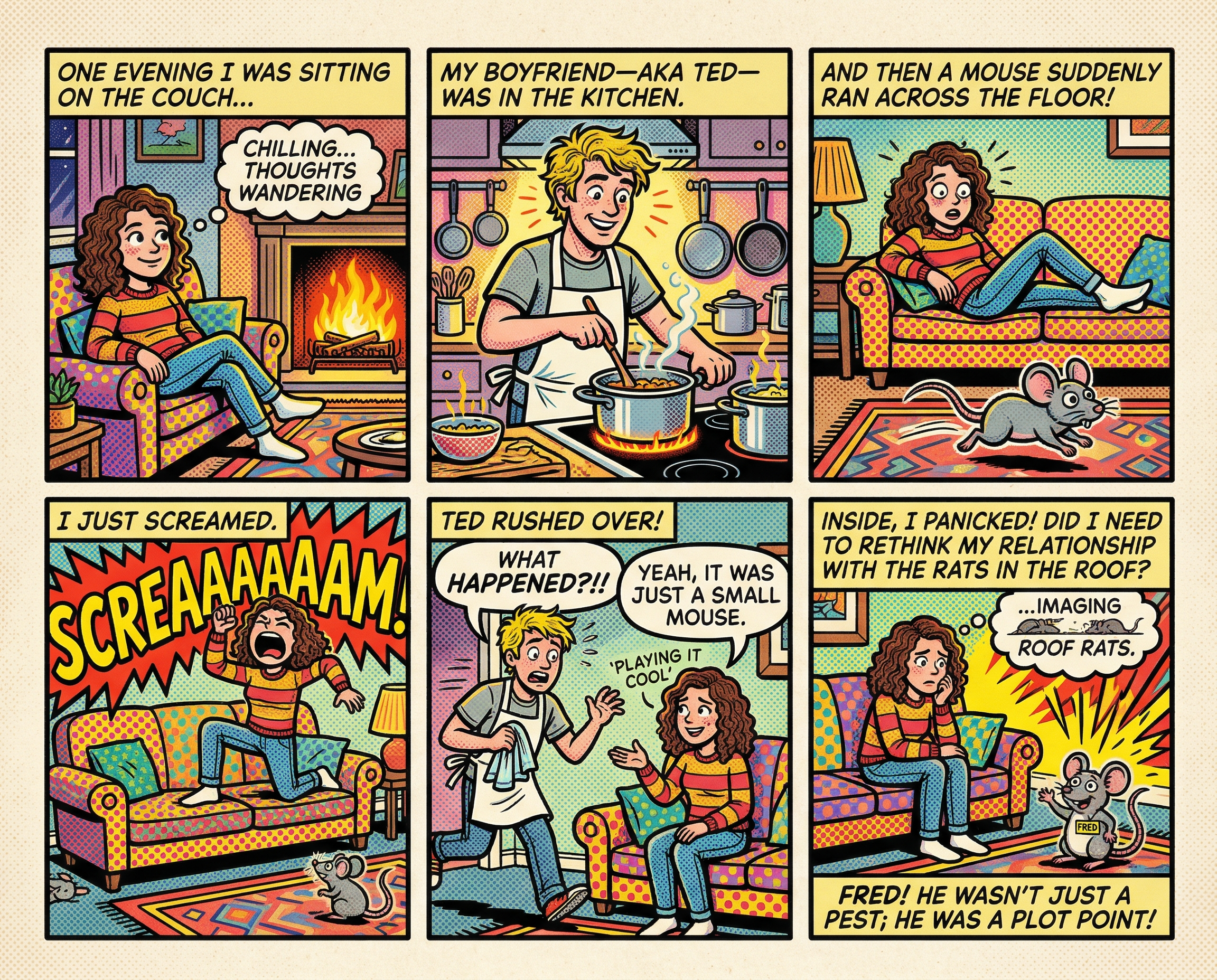
Here’s what happened:
Act 1: The Setup (Exposition)
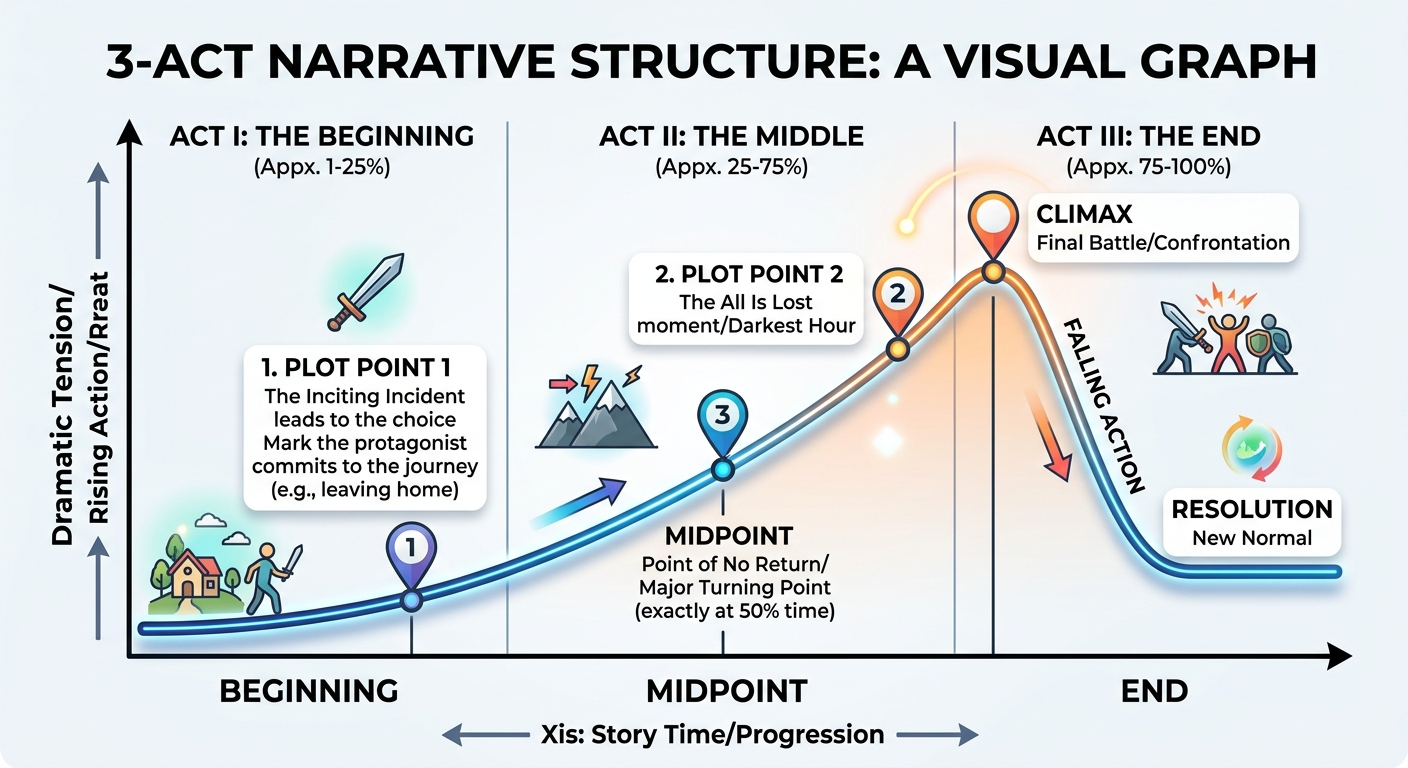
In the first act, the setting and main characters are introduced. After the exposition, the basic questions should be answered: What? Who? Where? What is it about?
At the end of the first act is the first plot point. Something irreversible happens here (a turning point). The protagonist’s life changes irrevocably. The central conflict begins. In the classic hero’s journey, this is where the journey starts.
Living with Fred
Act 2: The Confrontation
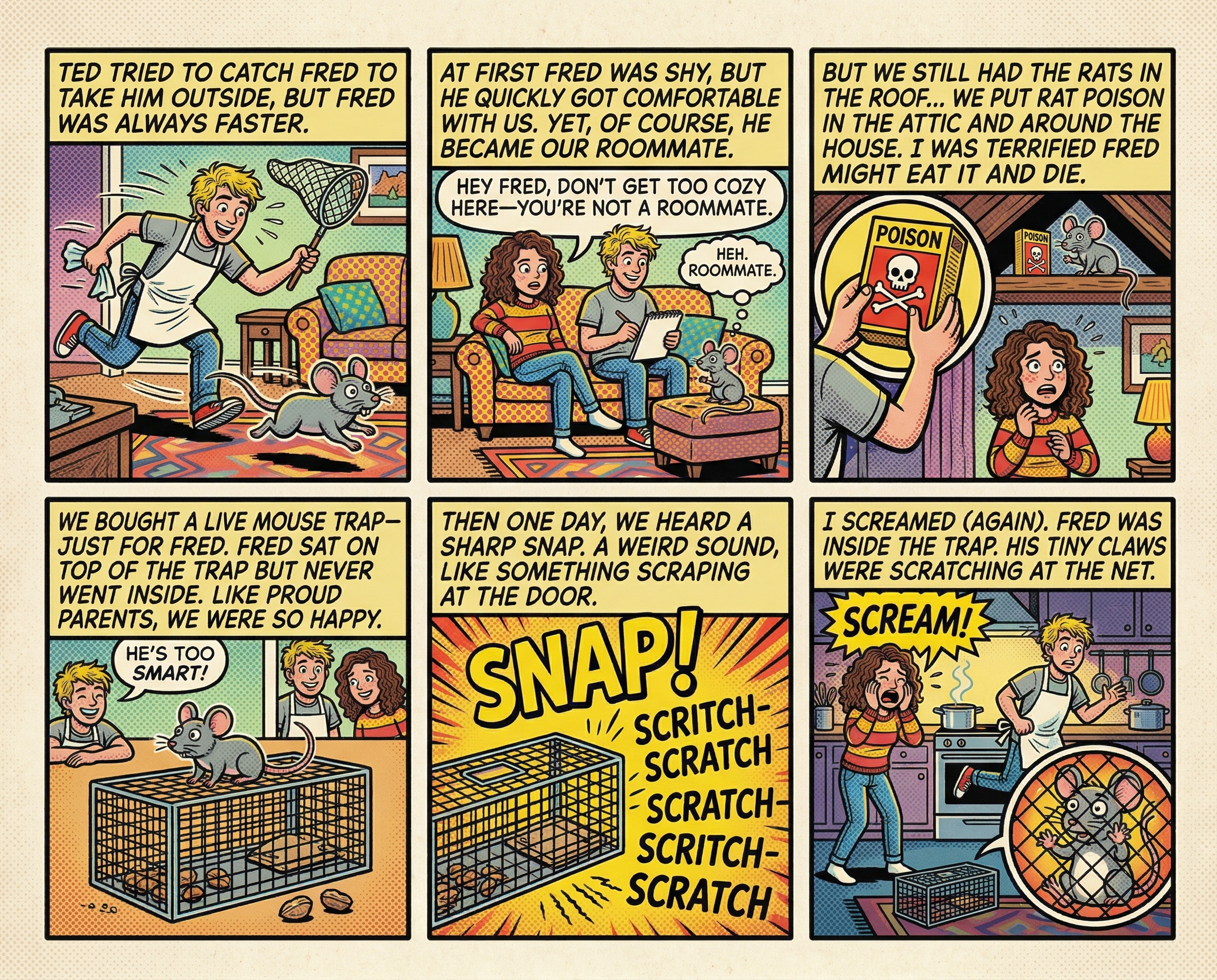
The middle or main part of the story takes place in the second act. Here, the story develops, and the conflict unfolds. In the first half, the protagonist often behaves passively, reacting rather than acting. At the midpoint, this changes: the protagonist shifts direction and becomes active. This is usually accompanied by a change in attitude, and often, the goal itself changes.
At the end of the second act is the second plot point. This is often the lowest point of the story.
Fred's freedom
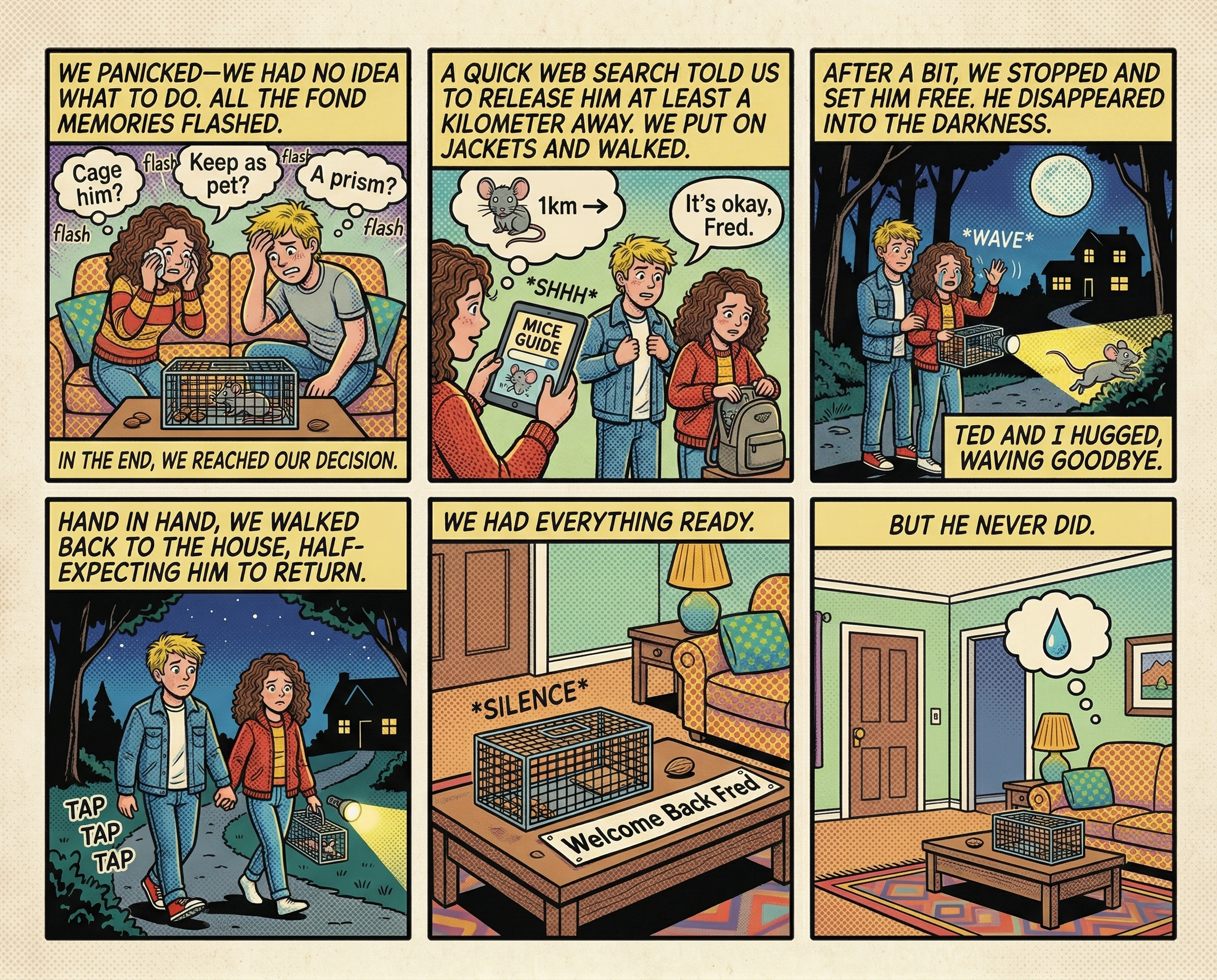
Act 3: The Resolution
In the third act, the central conflict of the story is resolved. The goals are achieved.
How to End This Storytelling 101 Session?
I could just repeat the golden rule one last time: Every good story has three acts—beginning, middle, and end. But let’s be honest—you already know that.
Instead, I wanted to do something different—and, hopefully, much more fun. So, here’s the twist: Let’s hear the story from Fred’s perspective. More specifically: We’ll let Fred tell his own story, in his own words.
How? By using AI tools to bring him to life: Le Chat for the script, ElevenLabs for the voice (because even mice deserve a dramatic monologue), Adobe Character Animator for the animation.
P.S.: The Unfiltered Truth About AI Storytelling
Most of the time, you only see the highly polished final cut—the seamless animation, the flawless voiceover, the perfect story. But let’s be real: AI tools are chaotic, glorious, and sometimes straight-up ridiculous. And honestly? That’s half the fun.
So, in the spirit of transparency (and a little bit of schadenfreude), here’s my mashup of AI-generated ideas for telling Fred’s story—bullshit, bloopers, and all.
Mehr Beiträge
Nothing found.
 German
  English